
Basement Waterproofing · Drainage Infrastructure
Interior Drainage
Systems
in Maryland
Hard-cased PVC drain tile at the footer — not corrugated tubing that collapses in Maryland clay
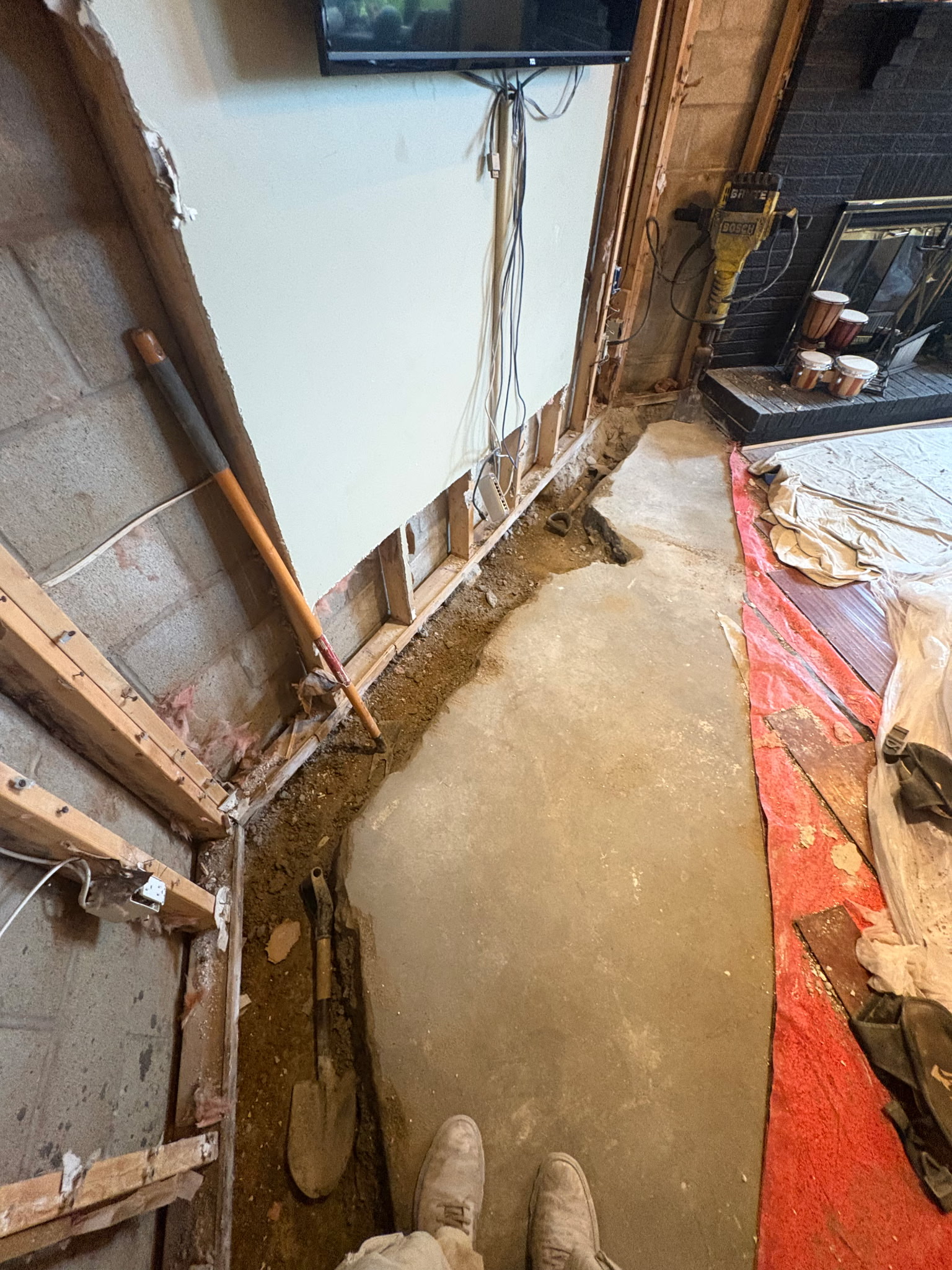
A perimeter drainage system intercepts hydrostatic water at the cove joint and channels it to a sump before it reaches your floor. Footer-depth installation, washed stone bed, hard-cased 4" PVC. Lifetime transferable guarantee.
The Infrastructure Behind Every Dry Basement
What an Interior Drainage
System Actually Does
An interior drainage system is not a waterproofing coating or a crack filler — it's infrastructure. A below-slab perimeter channel set at footer elevation that intercepts groundwater before it can spread across your living space. The drain tile gives hydrostatic pressure a controlled exit route to the sump. Without that route, pressure finds one on its own: through the cove joint, through hairline wall cracks, through the slab itself.
Maryland's Piedmont clay soils hold saturation for days after a storm event. When waterlogged soil presses against your foundation wall, that pressure doesn't diminish quickly. A properly installed interior drainage system captures water at the point of entry — the footer — continuously and passively, without any moving parts except the sump pump.
The distinction that matters most in Maryland: drain tile must be installed at footer depth, not slab level. Water enters at the cove joint — where the slab meets the wall at footer elevation. Slab-level tile is installed above the entry point. It catches some overflow. Footer-level tile is installed at the entry point. It catches the water before it enters.
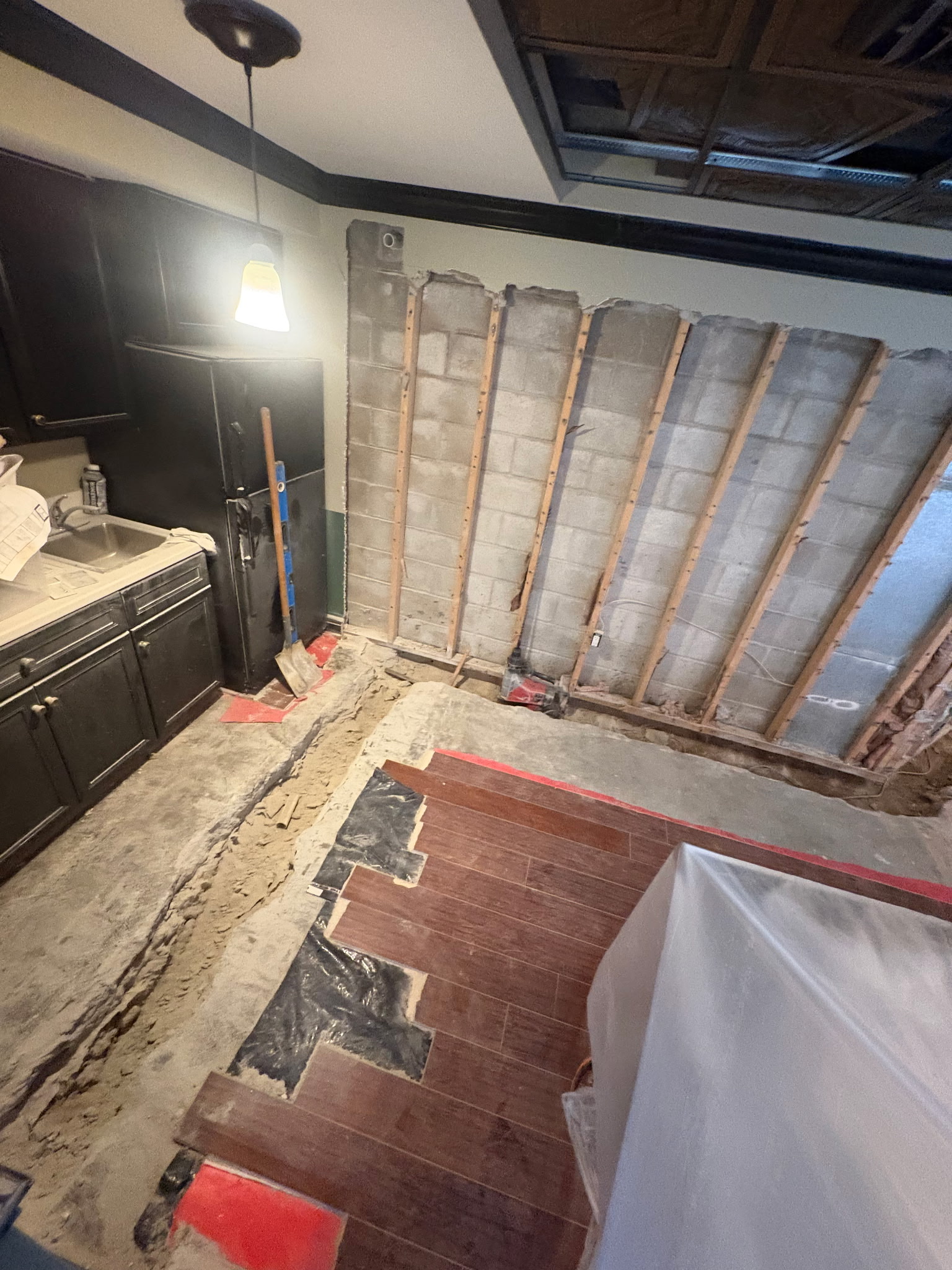
Drain tile set at footer elevation — washed stone bed, proper slope, tied to sump basin
These Signs Mean Water Has Found a Path
Your Basement May Need an
Interior Drainage System If:
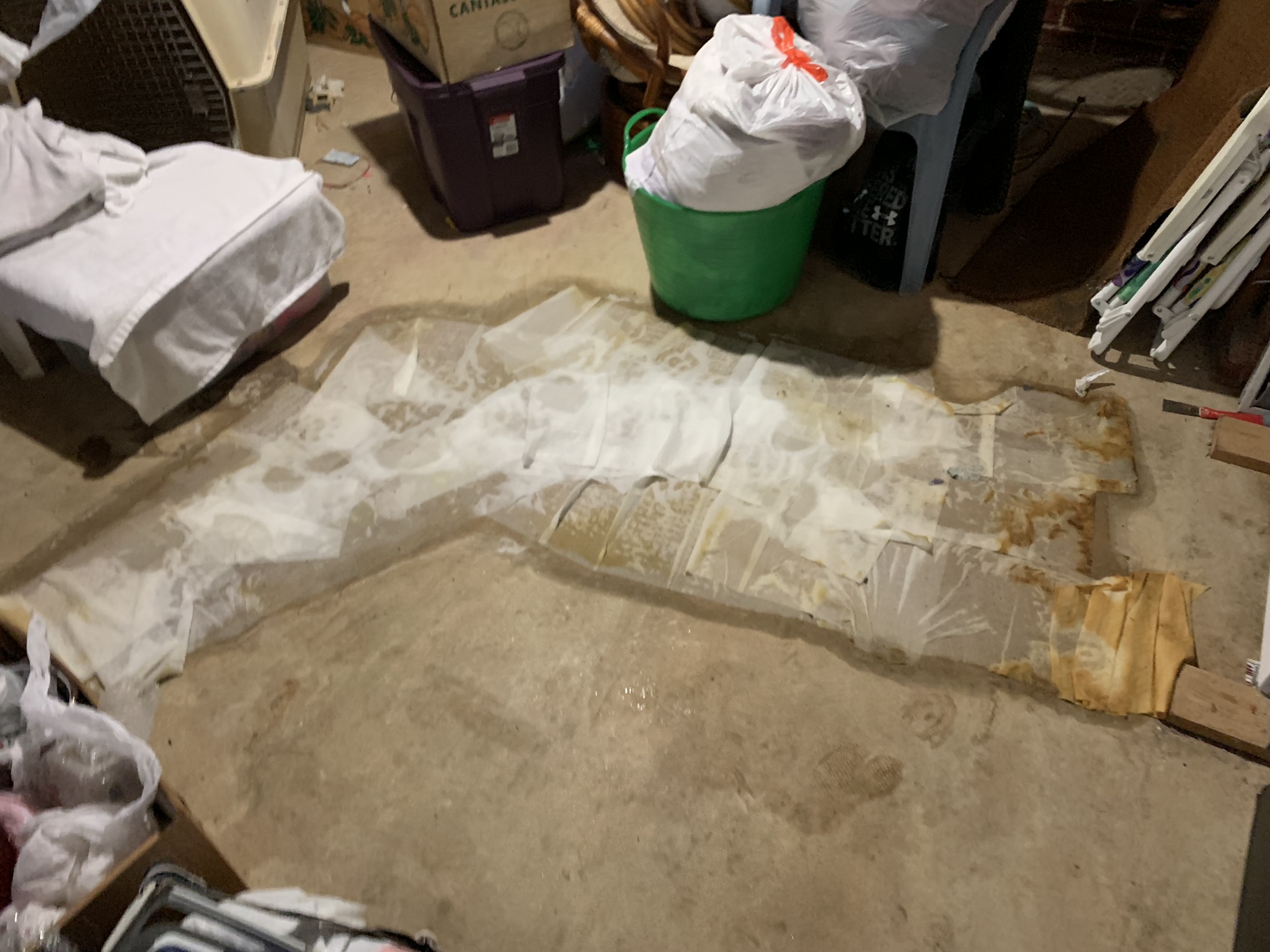
Water at the cove joint is the single most common basement problem in Maryland — and the one interior drainage is specifically engineered to solve.
- Water appearing at the floor-wall cove joint after rain or snowmelt
- Existing sump pump running constantly during heavy rain — sign the system is overwhelmed
- White efflorescence streaks running down block or poured walls — mineral deposit evidence of repeated water movement
- Recurring flooding in the same area of the basement after every major Maryland storm
- Exterior excavation not practical due to landscaping, deck, driveway, or tight lot line
What You Get
What OBW's Interior Drainage
System Includes
Every component is specified for Maryland's clay subsoil and hydrostatic conditions. No generic packages, no corrugated plastic tubing.
Hard-Cased 4" PVC Drain Tile
Installed at footer elevation — not corrugated tubing that collapses under Maryland clay. The hard case maintains its circular cross-section under soil load indefinitely, keeping flow unrestricted.
Washed Stone Bed
The drain tile sits on a properly sloped bed of washed stone that filters out clay fines before they enter the pipe. Slope is verified before concrete is poured — gravity does the work.
Footer Elevation Installation
We trench to the footer, not just below the slab. Water intercepted at footer depth is captured before it can rise and cross the floor. Slab-level drain tile misses the primary entry point.
Wall Drainage Matting (Where Applicable)
On block or poured walls with active seepage above the cove joint, drainage matting channels wall water down to the drain tile rather than across the floor.
Sump Basin & Pump Tie-In
The drain tile connects to a properly sized sump basin. We spec a commercial-grade Zoeller cast-iron submersible — not the plastic pedestal units sold by national franchises.
Concrete Restoration
Every installation ends with concrete poured, finished, and restored over the trench. Clean cuts. Seamless surface. Most visitors won't identify where the work was done.
Done in One to Two Days.
How OBW Installs an Interior
Drainage System
Every installation follows the same four-step sequence. Slope verification happens before concrete is poured — not after. A drainage system that isn't sloped toward the sump doesn't drain.
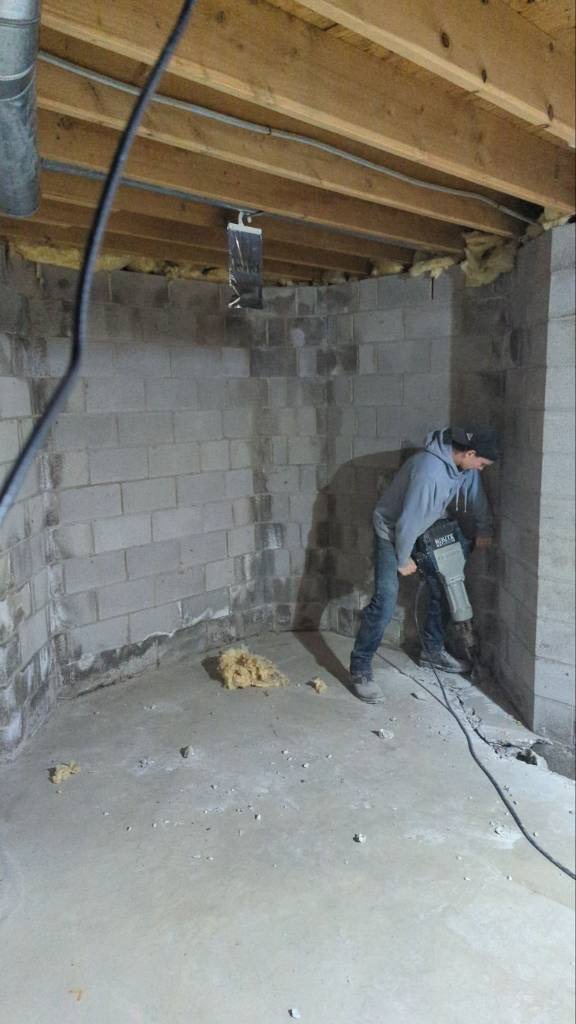
Perimeter Saw Cut
We cut the concrete 3–4 inches from the wall along the full perimeter to be drained. Clean cuts, contained dust. Work begins at the wall, not the center of the floor.
Trench & Stone Bed
We trench to the footer and set a washed stone bed at proper slope toward the sump basin location. Slope is measured and verified — drainage systems fail when they rely on flat installation.
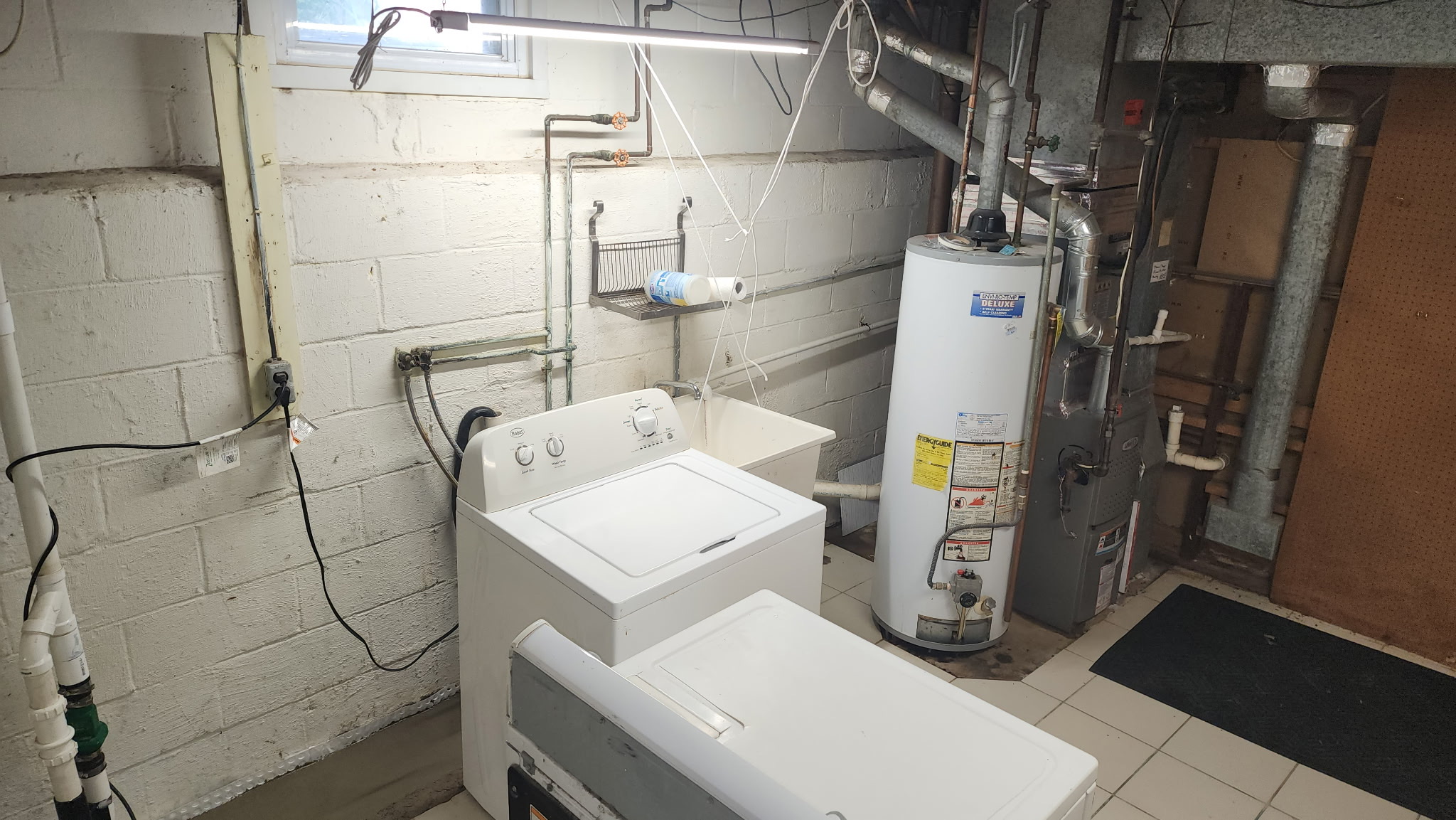
Drain Tile Installation
Hard-cased 4" PVC drain tile is set at footer elevation, packed with washed stone on all sides, and connected to the sump basin. Wall drainage matting is added where wall seepage is active.
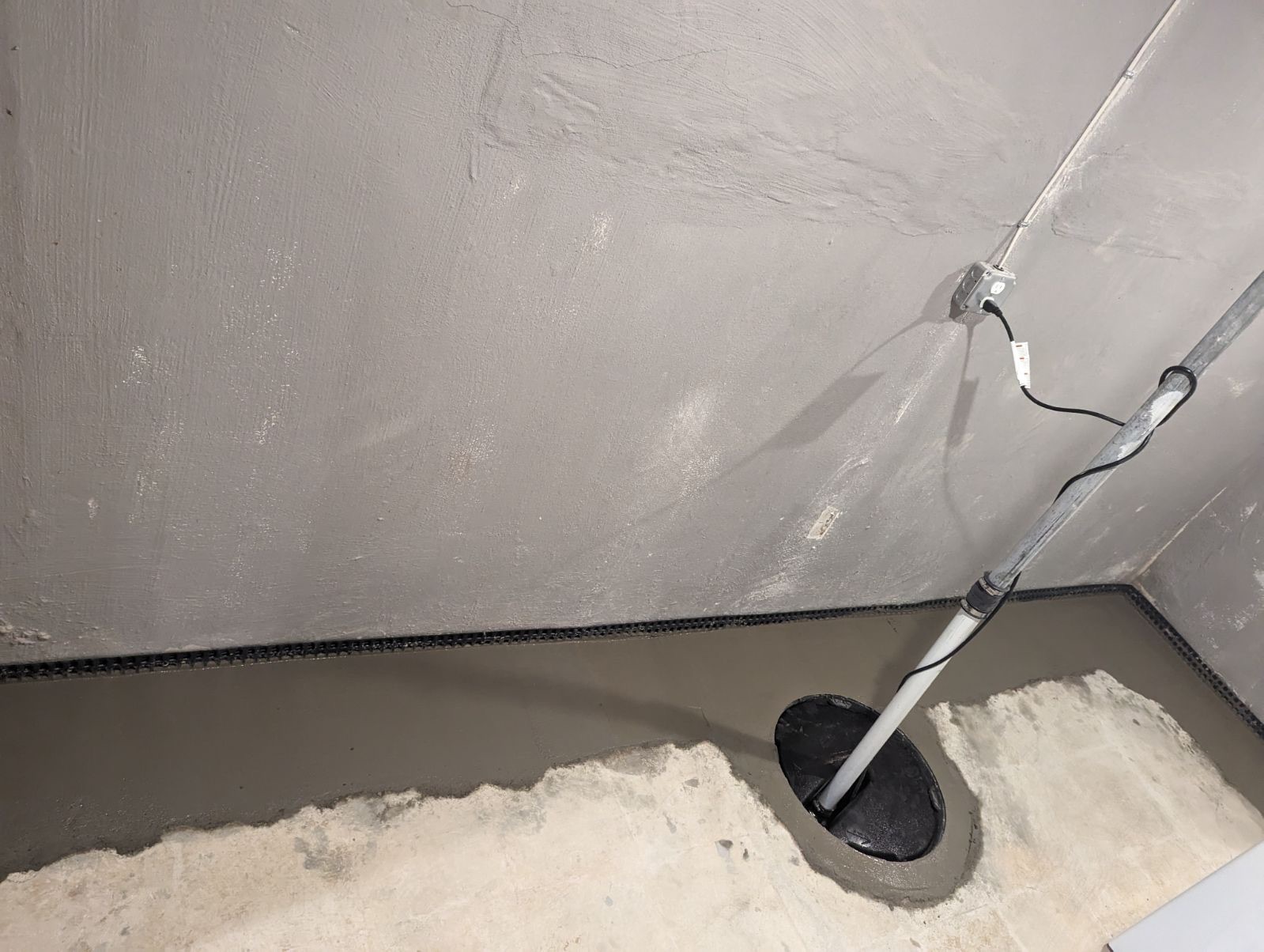
Sump Tie-In & Concrete Restoration
The drain tile is connected to the sump basin, the pump is installed and tested, and concrete is poured and finished over the trench. Most homeowners can't tell work was done.
Real Maryland Jobs
Recent Interior Drainage
Installations in Maryland
Every photo is an OBW job — real basements, real Maryland homeowners. Our inspectors photograph every installation before, during, and after.
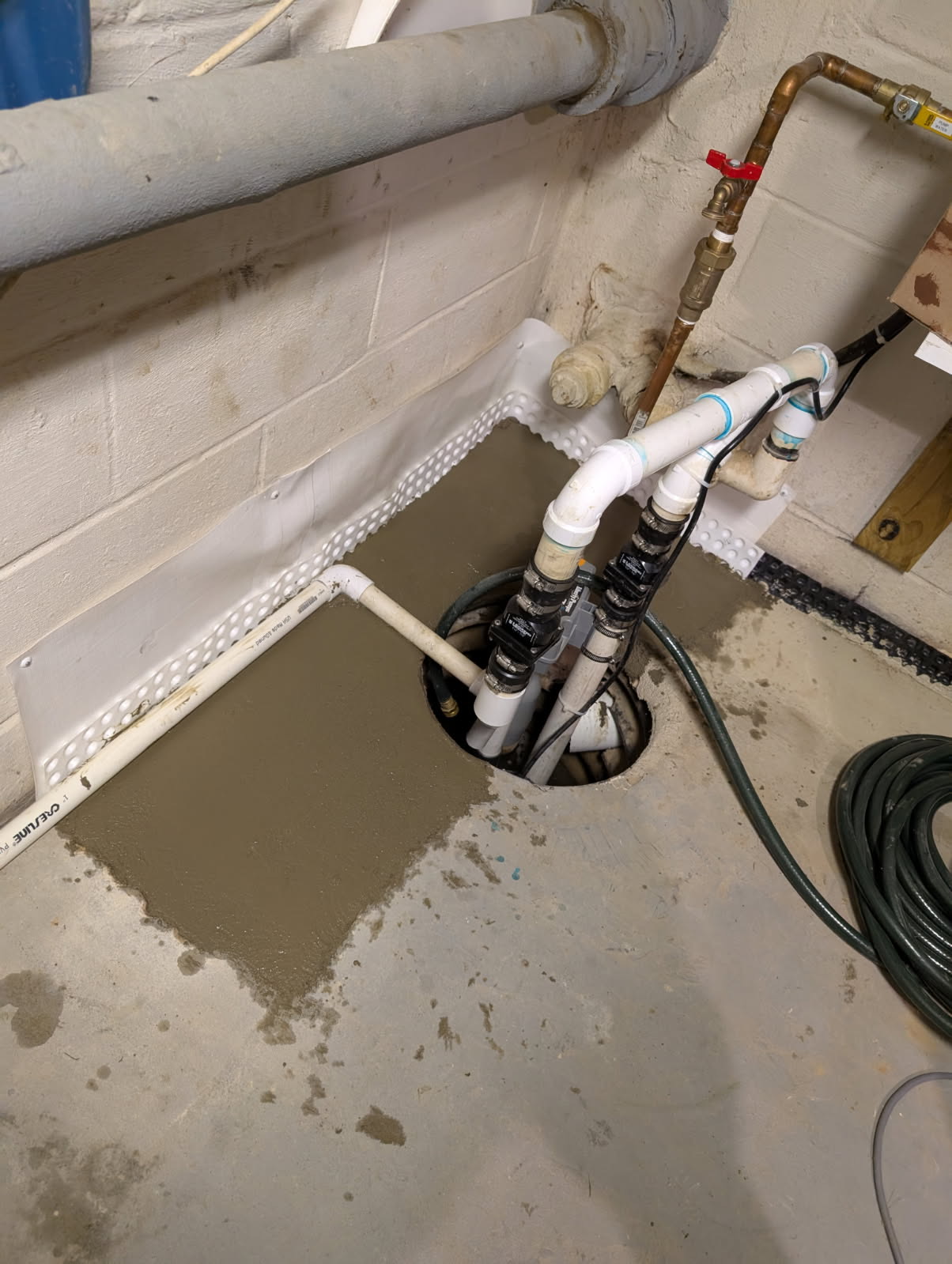 Baltimore County
 Full perimeter drain tile installation, Zoeller cast-iron sump tie-in. Concrete restored same day.
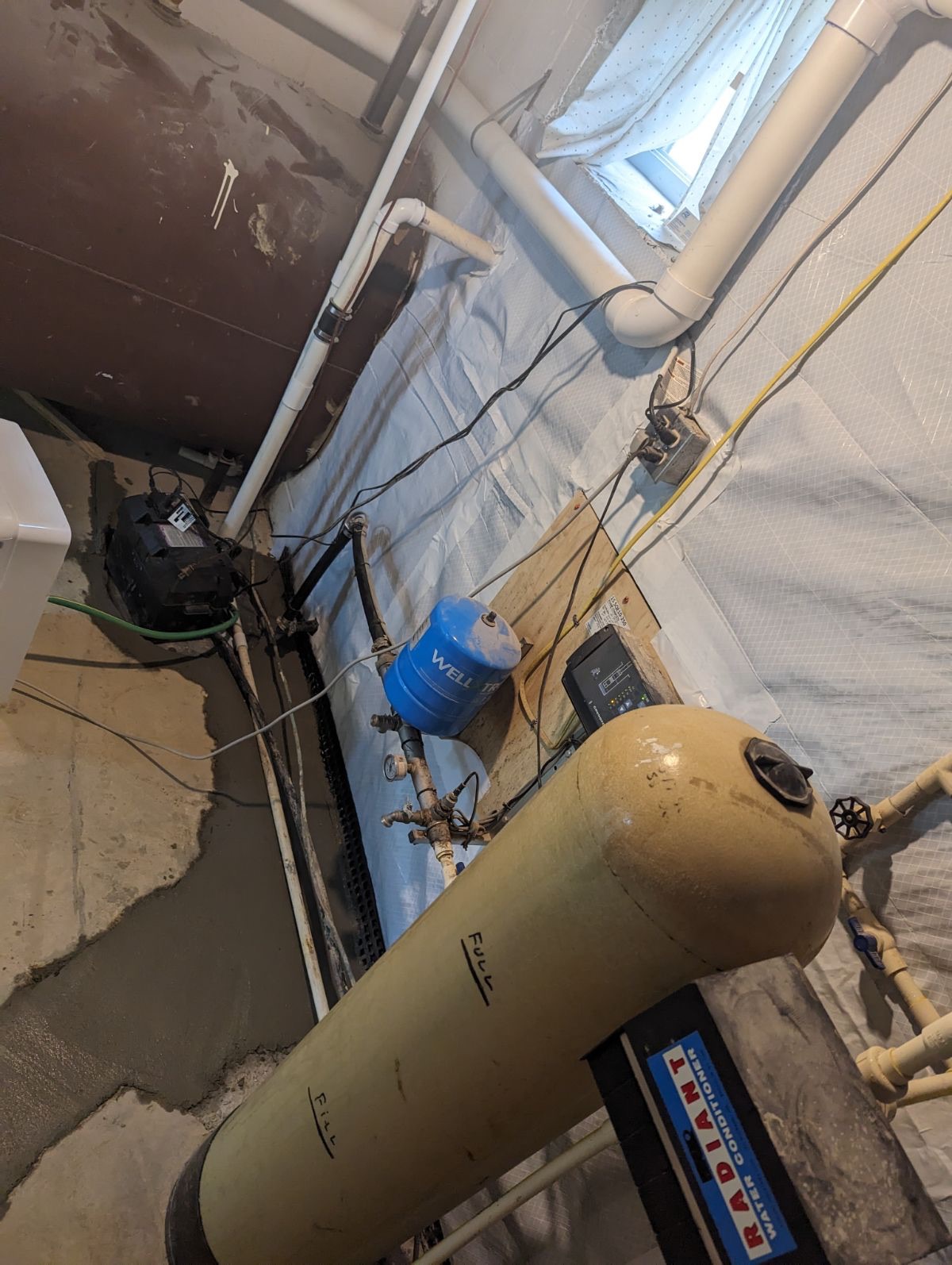 Harford County
 Footer-depth trench with washed stone bed installed. Drainage matting on active seepage wall.
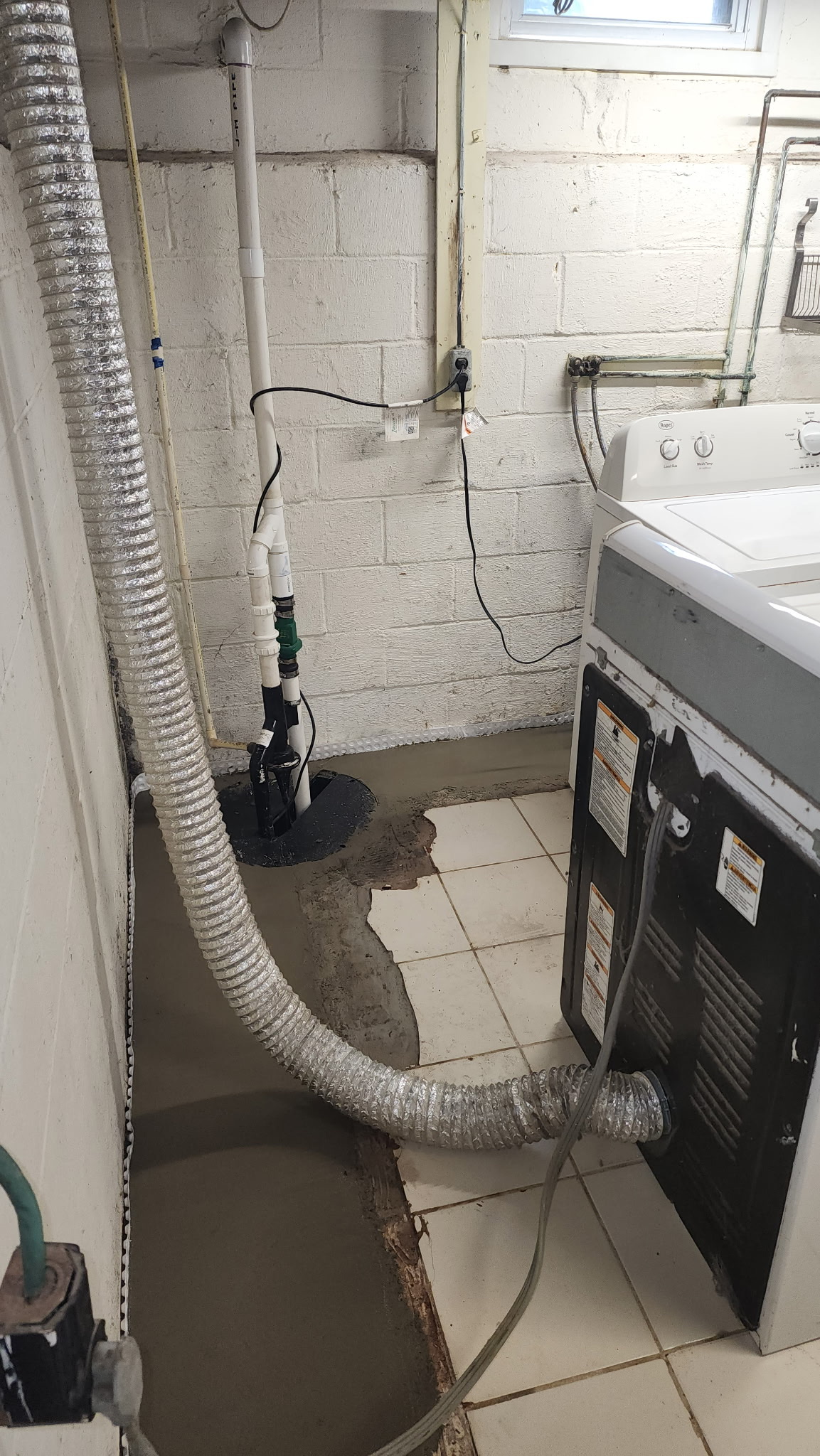 Cecil County
 New sump basin, hard-cased PVC drain tile, perimeter stone bed. Dry three seasons running.
Carroll County Wall drainage matting tied to perimeter drain tile. Active wall seepage redirected to sump.
Honest Answers. No Sales Pitch.
Common Questions About Interior
Drainage Systems
If your question isn't here, call (443) 855-5600. Our inspectors answer questions — they don't work on commission.
What is an interior drainage system and how does it work?
An interior drainage system is a below-slab perimeter channel that intercepts groundwater before it reaches the living space. It doesn't stop water from pressing against your foundation — it gives that water a controlled path to a sump pump instead of letting it find its own way across your floor. The key component is drain tile: perforated pipe (or in OBW's case, hard-cased PVC) set at footer elevation and sloped toward a sump basin. Water that enters through the cove joint or wall cracks flows into the drain tile by gravity and is pumped out.
The system works continuously and passively — no maintenance required, no moving parts except the sump pump. Once the concrete is restored over the trench, the drainage infrastructure is invisible and permanent. It intercepts water at the same point every storm, every season, for the life of the house.
What's the difference between OBW's drain tile and what national franchises install?
Most national waterproofing franchises install corrugated flexible tubing — the same product sold at hardware stores. Corrugated tubing has a known failure mode under soil pressure: it collapses or kinks, especially in Maryland's clay-heavy subsoil. OBW specifies hard-cased 4-inch PVC, the same product used in commercial construction and municipal drainage. It maintains its circular cross-section under soil load indefinitely.
It also doesn't accumulate sediment the way corrugated tubing does — the smooth interior allows flow to the sump without restriction. In a Maryland Piedmont clay subsoil environment, that distinction matters: clay particles suspend in water longer than sand, and a corrugated tube that traps sediment will reduce flow capacity over time. A hard-cased PVC tube does not.
Is an interior drainage system the same as a French drain?
Related but different. A French drain typically refers to a perforated pipe in a gravel trench, installed at grade level or below grade around the exterior of the foundation — it intercepts groundwater before it reaches the foundation wall. An interior drainage system serves a similar function but from inside the basement: it intercepts water that has already passed through the wall or cove joint.
Interior systems are installed when exterior excavation isn't practical or warranted — finished landscaping, decks, driveways, or tight lot lines that would make exterior excavation cost-prohibitive. For most Maryland homeowners, interior drainage achieves the same dry-basement result at a fraction of the exterior excavation cost.
Does an interior drainage system require maintenance?
The drain tile itself requires no maintenance — it's passive PVC underground. The sump pump is the component that requires attention: annual testing, battery check if you have a backup, and replacement when the motor shows wear (typically 7–10 years). OBW walks every customer through the annual test procedure (dump a bucket of water in the basin, confirm the pump activates and clears the water, confirm the check valve holds). That's the full maintenance program.
One seasonal note: if your basement has historically flooded during heavy rain events, we recommend inspecting the pump discharge line at the start of spring. Debris can block exterior discharge points during winter. A blocked discharge line is the most common reason an otherwise functional sump system backs up.
Can a drainage system be installed in a basement with existing concrete or a finished floor?
Yes. We saw-cut the concrete along the perimeter, trench to the footer, install the system, and restore the slab. The finished surface is seamless — most visitors can't identify where the cut was made. In finished basements, we access the perimeter by removing the bottom section of drywall and, if necessary, the perimeter floor covering. We restore the concrete; carpentry restoration (drywall, flooring) is handled separately.
One thing to arrange before we arrive: remove any carpet or area rugs along the perimeter walls. You can handle this yourself ahead of the job or we can include it. Concrete restoration is always part of every OBW drainage installation — you won't be left with an open trench.
70 Years of Maryland Basements
Why Maryland Homeowners Choose
Oriole Over National Brands
Three generations of the Pirog family have been solving Maryland basement problems since Frank Pirog Sr. founded Oriole in 1953. The drainage system hasn't changed — the components have only gotten better.
Hard-Cased PVC — Not Corrugated
We specify the same drain tile grade used in commercial construction. Corrugated tubing collapses under Maryland clay. Ours doesn't — and it won't in 30 years either.
Footer Depth — Not Slab Level
We trench to the footer, where water actually enters. Slab-level drain tile misses the primary entry point. Depth is the difference between a system that works and one that doesn't.
Lifetime Transferable Guarantee
The drainage system guarantee transfers to the next homeowner automatically. National franchises don't offer this. It's a documented selling point when you list the house.
No Commissioned Salespeople
Our inspectors diagnose accurately because they're paid to — not to sell a larger system. You get the scope your basement actually needs, in writing, before work begins.
From Satisfied Maryland Homeowners
What Maryland Homeowners Say About Interior Drainage
★★★★★
"Interior drainage was the right call — they explained why exterior excavation wasn't necessary for my situation and saved me thousands. System has been dry for two full seasons."
Interior Drainage System
★★★★★
"The concrete restoration after installation was clean. My floor looks like nothing was ever done. Visitors don't believe I had waterproofing work done."
Perimeter Drain Tile
★★★★★
"They tied the drainage into my existing sump pit rather than digging a new one — saved me half a day's work and kept the cost down."
Interior Drainage + Sump Tie-In
Ready When You Are. No Pressure.
Three Steps to a Permanently
Drained Maryland Basement
From first call to finished concrete, most OBW drainage installations are scheduled and complete within two to three weeks.
Schedule a Free Inspection
A local OBW inspector visits your home, identifies every water entry point, measures your perimeter, and determines whether interior drainage is the right solution — at no charge and no obligation.
Get Your Written Estimate
You receive a written, itemized quote the same day as your inspection. A specific price for your basement's linear footage and scope — not a vague range over the phone.
We Handle the Installation
Our crew installs the full drainage system in one to two days, pours and finishes the concrete, and walks you through the Lifetime Transferable Warranty before they leave.
Give Groundwater a Better Path.
Free inspection. Written estimate same day. No pressure, no commissioned salespeople.
Family-owned since 1953 · MHIC #4247 · Lifetime Transferable Guarantee