
On the Walls, Not the Floor
Crawl Space
Insulation
in Maryland
Batt insulation falls, absorbs moisture, and loses R-value in Maryland crawl spaces, the correct approach puts insulation on the walls, not the floor
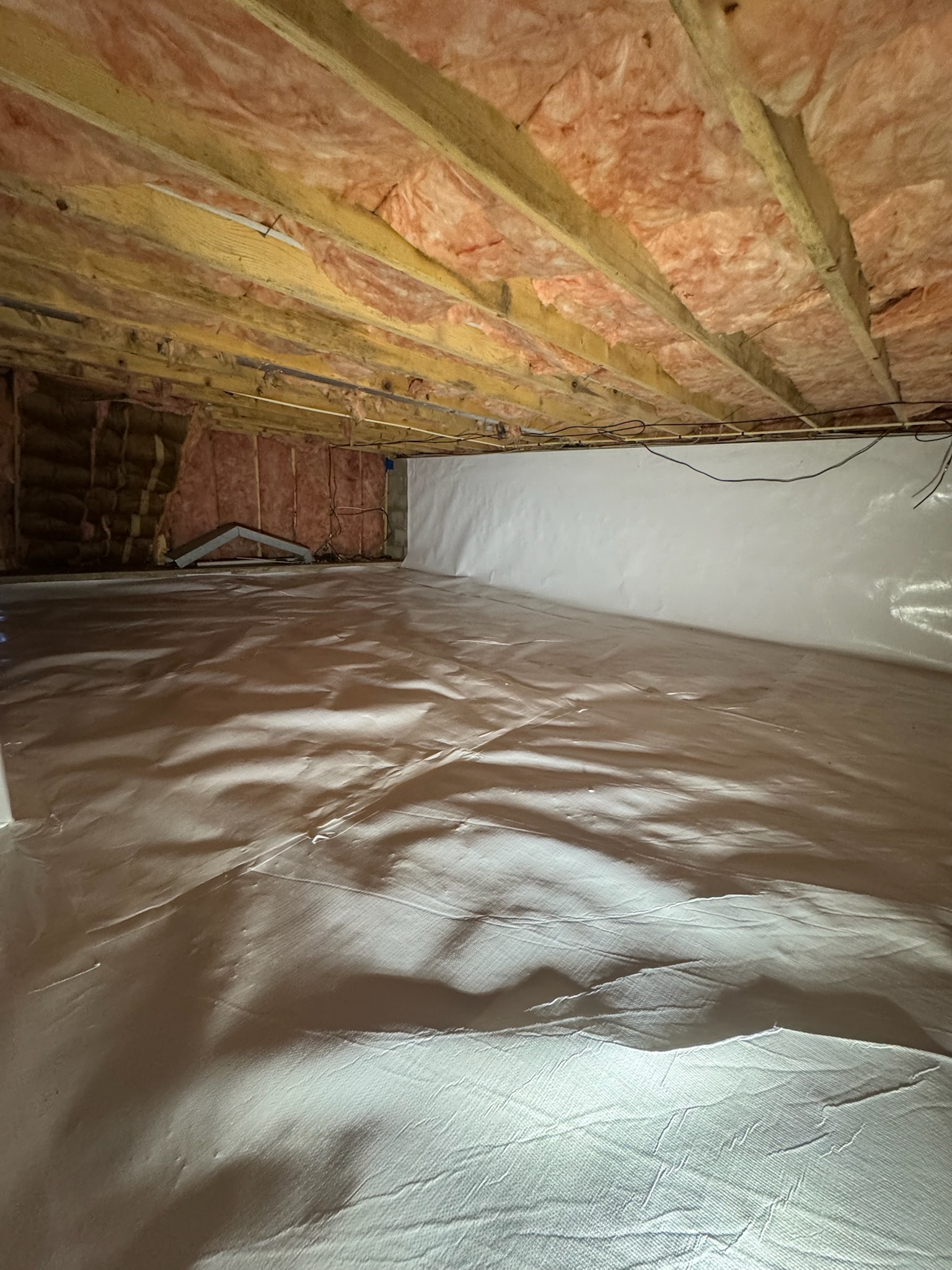
Rigid foam board and closed-cell spray foam on foundation walls. R-10+ continuous per Maryland Climate Zone 4 code requirements. Existing batt removal included. Integrated with vapor barrier and vent sealing for a complete sealed crawl space system.
Why Where You Insulate Matters as Much as How Much
Crawl Space Insulation:
Walls, Not Floor Joists
The traditional approach, batt insulation stapled between floor joists, was designed for vented crawl spaces where the crawl space itself was intentionally cold and open to outside air. The insulation kept that cold air from reaching the living space above. In Maryland's climate, this approach fails on two fronts.
First, fiberglass batts absorb moisture vapor freely. Maryland's summer humidity saturates batt insulation over repeated seasons, reducing its effective R-value and creating the damp, dark environment mold requires. Within a few years, the insulation is a liability, not an asset, and eventually it falls. Second, once you seal and condition a crawl space (which is the correct approach for Maryland), the crawl space air is at house temperature and humidity. Insulating the floor above a conditioned crawl space makes as much sense as insulating an interior floor between two heated rooms.
The correct placement in a sealed system is foundation walls, the surface that separates the conditioned crawl space from the cold ground and outside air. R-10 continuous on the foundation walls meets Maryland code, keeps the crawl space temperature stable, and reduces the dehumidifier's load year-round.
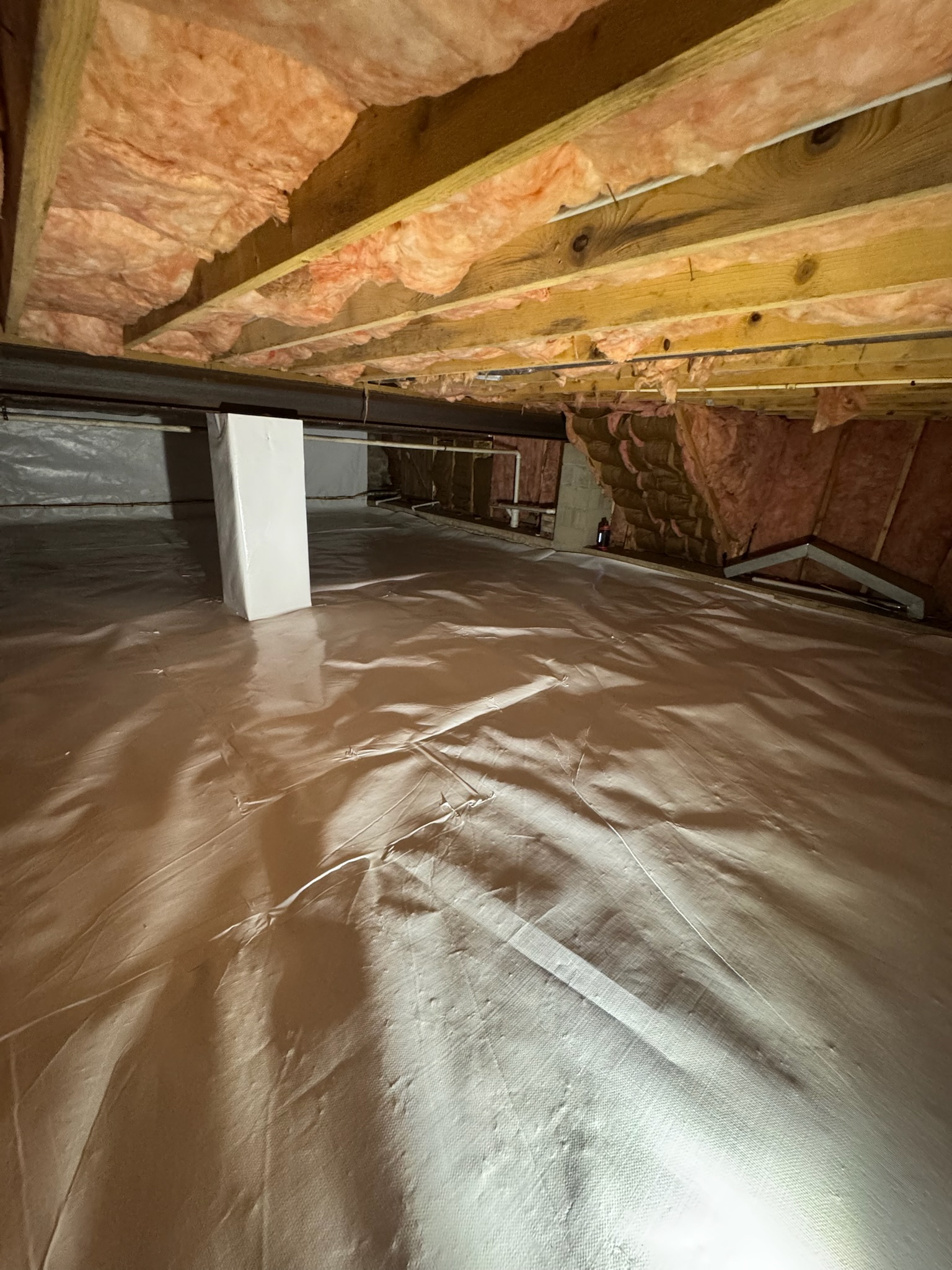
Foundation wall insulation, the correct location for a sealed and conditioned crawl space
Signs Your Crawl Space Insulation Has Failed
Warning Signs That Batt Insulation
Is Working Against You
Failed crawl space insulation doesn't announce itself, it degrades quietly over Maryland summers until a home inspection or crawl space assessment reveals the extent of the problem.
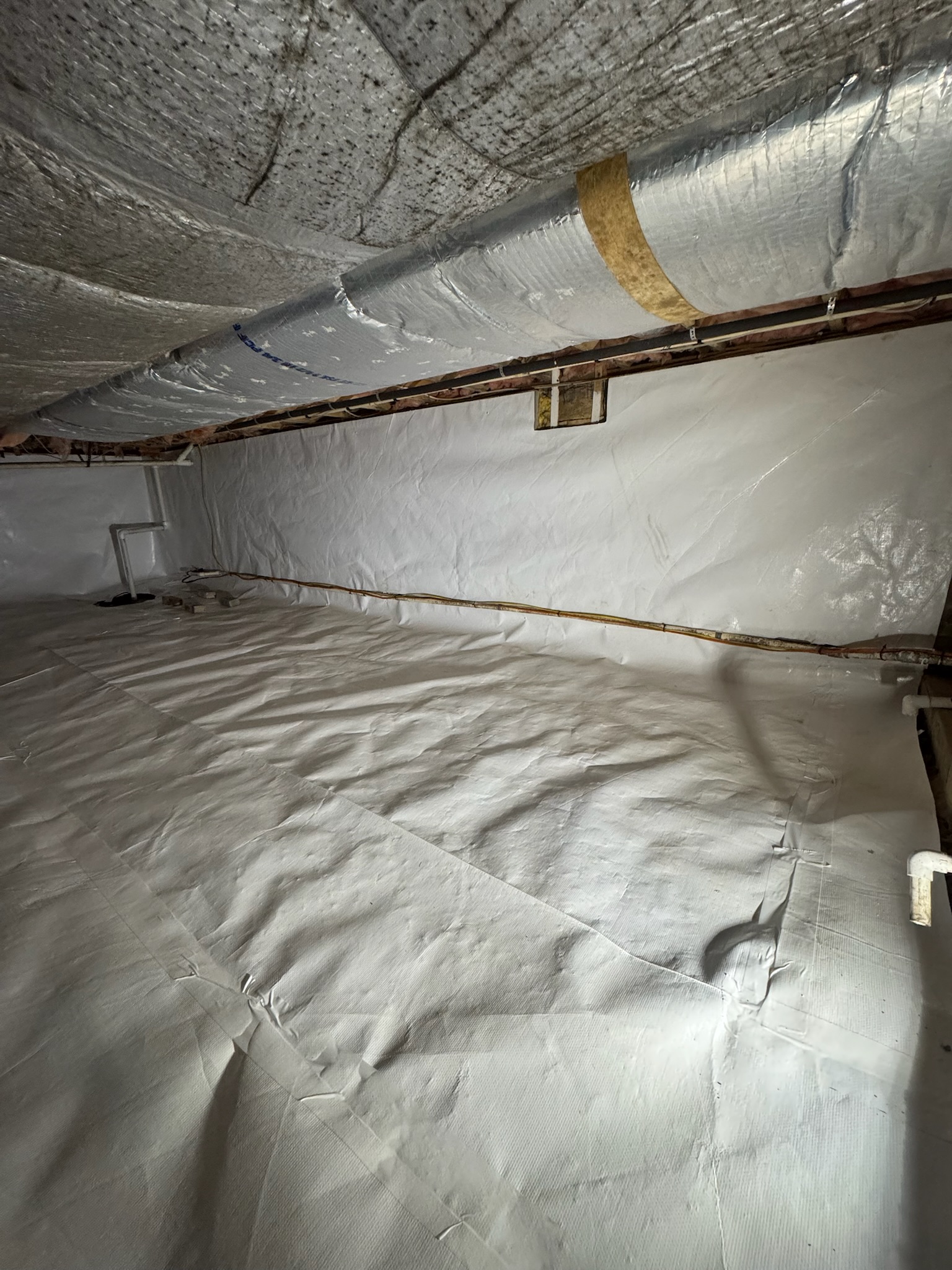
- Batt insulation sagging, damp, or fallen from between floor joists
- Black or green discoloration on the face of floor joist batts (mold on batt surface)
- Cold floors in rooms above the crawl space during Maryland winters
- Higher-than-expected heating and cooling bills despite normal operation
- HVAC ducts in the crawl space that are sweating or losing conditioned air through the insulation gap
What You Get
What OBW's Crawl Space
Insulation Includes
Specified for Maryland Climate Zone 4. Installed in the correct location for the system type. Coordinated with your full encapsulation scope.
Foundation Wall Insulation (Not Floor Joists)
In a sealed system, insulation belongs on the foundation walls, not the floor above. OBW installs to the correct location for the system type and Maryland's climate zone.
Rigid Foam or Closed-Cell Spray Foam
XPS or polyiso rigid foam board for flat wall surfaces. Closed-cell spray foam for irregular geometry, rim joists, or where integrated air sealing is needed. Both specified per Maryland Climate Zone 4 requirements.
R-10+ Continuous Coverage
Maryland energy code requires R-10 continuous on crawl space foundation walls. OBW installs to code minimums or better, no thermal bridges, no gaps.
Existing Batt Removal and Disposal
If batt insulation is present in the floor joist bays, removal and proper disposal are included in the quote as a separate line item. Damp batts in a sealed space work against the system.
Energy Code Documentation
Installed R-value documentation provided for homes subject to energy rating requirements. Available for HERS scoring, permit sign-offs, and homeowner records.
Written Estimate Before Any Work
Itemized quote with insulation method, wall square footage, batt removal (if applicable), and full system scope, before we schedule the job.
Remove. Insulate. Integrate.
How OBW Installs Crawl Space
Insulation
We assess what's there, remove what's failing, and install what the system actually requires. No skipped steps, no batts left in joist bays where they don't belong.
Existing Insulation Assessment
OBW inspects existing floor joist batt insulation for moisture content, mold, and whether the crawl space is vented or sealed. The insulation approach depends on whether we are converting a vented crawl space or improving an existing sealed one.
Batt Removal (If Present)
Existing floor joist batts are removed and properly disposed of. In Maryland, batts with mold growth require regulated disposal. This step prepares both the floor joist bays for visual inspection and the foundation walls for proper insulation installation.
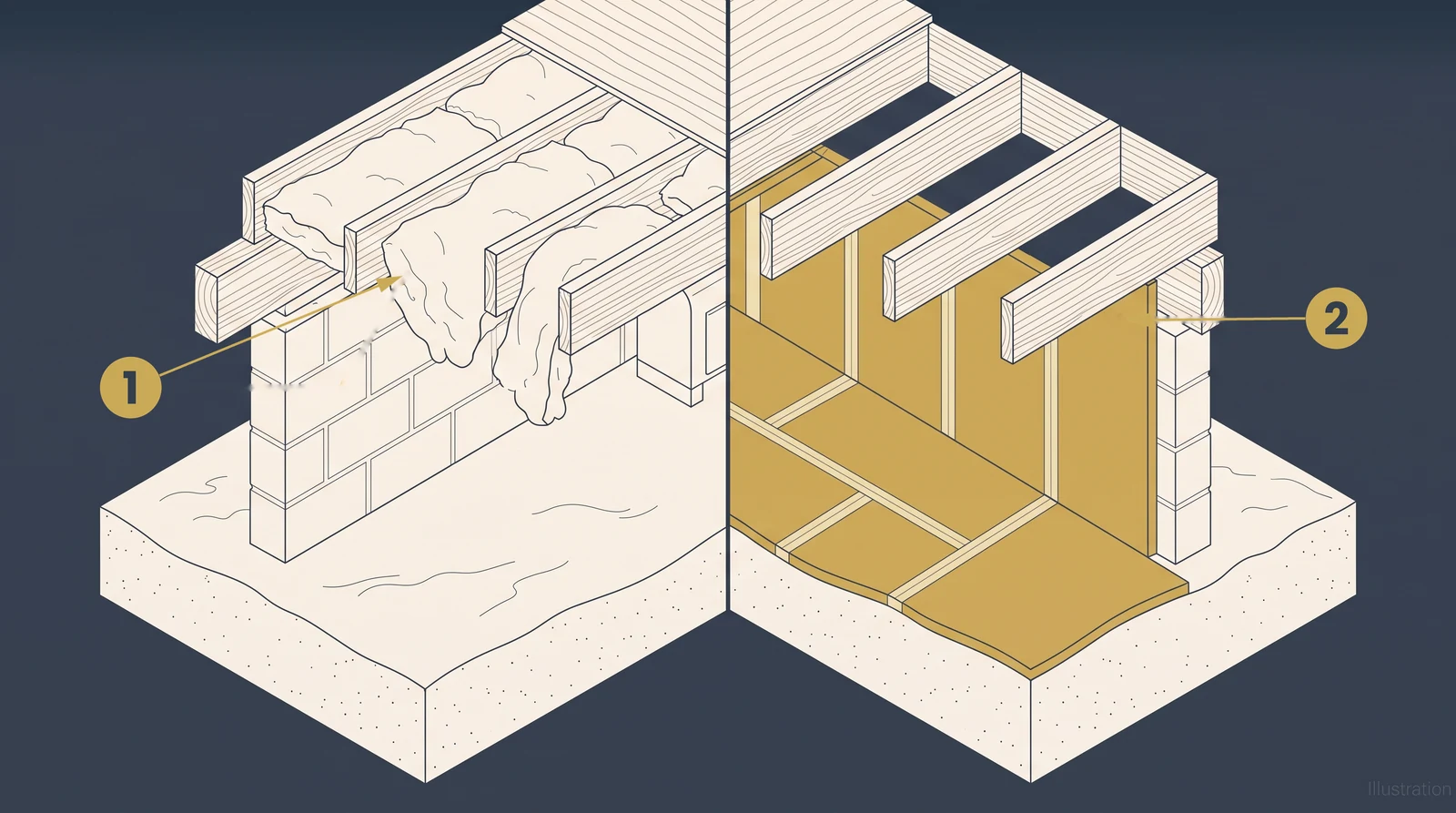
- Batt insulation sagging out of the joists
- Rigid foam board fixed to the wall instead
Foundation Wall Insulation
Rigid foam or spray foam is installed on the foundation walls. Rigid foam is cut, fitted, mechanically fastened, and taped at seams. Spray foam is applied in a single pass, filling voids and creating an integrated air and vapor barrier.
System Integration
Wall insulation is integrated with the vapor barrier and vent sealing system. The completed installation is photographed and documented. R-value certification and warranty documentation are provided before the crew leaves.
Honest Answers. No Sales Pitch.
Common Questions About
Crawl Space Insulation
If your question isn't here, call (410) 879-3360. Our inspectors answer questions and give honest, consultative guidance.
Why does batt insulation fail in crawl spaces?
Batt insulation, the fiberglass rolls or batts stapled between floor joists, was the standard recommendation for crawl spaces under the old vented-crawl-space model. The premise was that insulating the floor above a vented crawl space would keep the living area warm while allowing the crawl space itself to vent freely to outside air. That approach has two problems in Maryland.
First, batt insulation has no vapor barrier function. It does not stop moisture movement. In a Maryland crawl space, where summer humidity is 70 to 80% outdoors, moisture vapor diffuses freely through fiberglass batts. The batts absorb moisture over repeated humid seasons, lose R-value as moisture content increases, and create a damp microenvironment on the face of the batt that is ideal for mold growth. Over time, the mechanical fasteners (staples or wire rods) corrode in the damp environment and the batts fall, leaving sections of the floor entirely uninsulated.
Second, batt installation between floor joists is incompatible with a sealed, conditioned crawl space. Once you seal the foundation vents and condition the crawl space air, the space itself is part of the conditioned building envelope. Insulating the floor above a conditioned space wastes that conditioning, the crawl space air is at house temperature and humidity, and the floor insulation above it serves no function. The insulation belongs on the foundation walls, not the floor joists, in a sealed system.
What insulation does OBW install in a sealed crawl space, and where does it go?
In a sealed and conditioned crawl space, insulation is installed on the foundation walls, not the floor joists. The wall insulation keeps the crawl space air temperature consistent with the rest of the house, which reduces condensation risk and minimizes the load on the dehumidifier. Rigid foam board (typically XPS or polyiso) and closed-cell spray foam are both appropriate for foundation wall application in Maryland's conditions.
Rigid foam board is cut to fit the foundation wall surface and mechanically fastened or adhered. Seams are taped. For a standard 8-foot crawl space wall, a single layer of 2-inch rigid foam achieves R-10, which exceeds Maryland's Climate Zone 4 requirement of R-10 for crawl space foundation walls. Closed-cell spray foam achieves higher R-values per inch and provides an integrated air and vapor barrier, it's appropriate for walls with irregular surfaces or where air sealing is a priority.
In some crawl spaces, particularly those with irregular foundation geometry or stub walls, a combination approach is used: spray foam at the rim joist and irregular sections, rigid foam on flat wall surfaces. OBW specifies the approach after assessing your crawl space geometry.
What R-value does Maryland require for crawl space insulation?
Maryland falls in IECC Climate Zone 4 (with parts of western Maryland in Zone 5). Under the current adopted energy code, crawl space foundation walls require minimum R-10 continuous insulation or R-13 cavity insulation. For comparison, a typical 2-inch layer of XPS rigid foam is R-10 and a 2-inch layer of closed-cell spray foam is R-12 to R-14 depending on formulation.
The 'continuous' designation is important. R-10 continuous means R-10 with no thermal bridges, no breaks in the insulation layer where framing or fasteners conduct heat. Rigid foam on the interior face of the wall achieves this. Batt insulation between studs on a framed interior wall does not, the stud framing at 25% of wall area is uninsulated and conducts heat freely, reducing the effective R-value significantly.
OBW quotes insulation to meet or exceed current energy code requirements for your county. If your home is subject to an energy rating or HERS score review, which can be required for major renovation permits, we can provide documentation of the installed R-value.
Should I remove the existing floor joist batt insulation before installing wall insulation?
In most sealed crawl space conversions, yes. Leaving batt insulation in the floor joist bays of a conditioned crawl space is unnecessary and can be counterproductive. The batts absorb moisture even in a dehumidified space, and over time they contribute to elevated humidity in the lower portion of the crawl space air. Removal is included in OBW's crawl space insulation quotes when existing batt is present.
The exception is very new batt insulation in excellent condition in a crawl space with no moisture history. In those cases, OBW may recommend monitoring the insulation's condition through the first summer after sealing rather than removing immediately. If the hygrometer readings indicate the dehumidifier is maintaining target RH without issue, the batts may be left in place short-term. This is an assessment made during the inspection, not a blanket recommendation.
Batt removal is straightforward but labor-intensive and requires proper disposal, fiberglass batts with mold growth are regulated waste in Maryland. OBW includes removal and proper disposal in the project estimate.
How much does crawl space insulation cost in Maryland?
Crawl space wall insulation pricing depends on the linear footage of foundation wall and the insulation method specified, rigid foam board versus closed-cell spray foam. For a typical 1,000 square foot crawl space with 8-foot walls and 150 linear feet of foundation perimeter, that translates to roughly 1,200 square feet of wall area. We quote every insulation job per linear foot of foundation wall and method specified after a free, in-person inspection, no phone estimates, no generic price range.
Crawl space insulation is almost always quoted as part of a complete encapsulation system. As a standalone service, if you already have a sealed and dehumidified crawl space, the same itemized approach applies. OBW provides itemized quotes so you can see the insulation cost separately from liner, drainage, and dehumidifier components.
Batt removal, if needed, is quoted as a separate line item based on quantity and disposal requirements. OBW does not bundle batt removal into the base insulation price, you see what each element costs before any work is scheduled.
70 Years of Maryland Crawl Spaces
Why Maryland Homeowners Choose
Oriole Over National Brands
Three generations of the Pirog family have been solving Maryland crawl space problems since Frank Pirog Sr. founded Oriole in 1953.
Correct System Design
We insulate foundation walls in sealed systems, not floor joists. The distinction matters for energy performance and moisture management. We explain why before you decide.
Workmanship Guarantee
Ask your inspector about OBW's workmanship guarantee for your specific job. Terms vary by service, and you'll see exactly what applies before any work begins.
Maryland Climate Zone Spec
We install to Climate Zone 4 code requirements and specify materials that maintain R-value in Maryland's humidity, not materials rated for drier climates.
Family-Owned Since 1953
Founded by Frank Pirog Sr., now led by Amber Pirog. Seventy years of Maryland crawl spaces, including decades of watching batt insulation fail in the region's humidity.
Ready When You Are. No Pressure.
Three Steps to a Properly
Insulated Crawl Space
From first call to completed installation, most OBW crawl space insulation projects are scheduled and finished within one to two weeks.
Get My Free Inspection
An OBW inspector assesses your existing insulation, identifies whether the crawl space is sealed or vented, and evaluates the foundation wall geometry. No charge, no obligation.
Get Your Written Estimate
You receive an itemized quote covering insulation method, wall square footage, batt removal if applicable, and coordination with any vapor barrier or vent sealing scope. A firm price before anything is scheduled.
We Handle the Work
Our crew removes existing batts, installs foundation wall insulation, integrates with the vapor barrier and sealed system, and provides R-value documentation and warranty paperwork on-site.
Ready to Insulate Your Crawl Space Correctly?
Free inspection. Written estimate same day. No pressure, honest, consultative guidance.
Family-owned since 1953 · MHIC #4247 · Workmanship Guarantee