
Foundation Repair · Problem Signs
Foundation
Settlement
in Maryland
When the ground beneath your foundation consolidates, washes away, or shrinks, the foundation follows. Diagonal cracks, sloping floors, and sticking doors are the early warning.
Settlement diagnosis, cause identification, and pier installation for Maryland residential and commercial foundations. Push piers and helical piers transfer load from unstable Piedmont clay to competent bearing strata. Free inspection, written quote, lifetime guarantee.
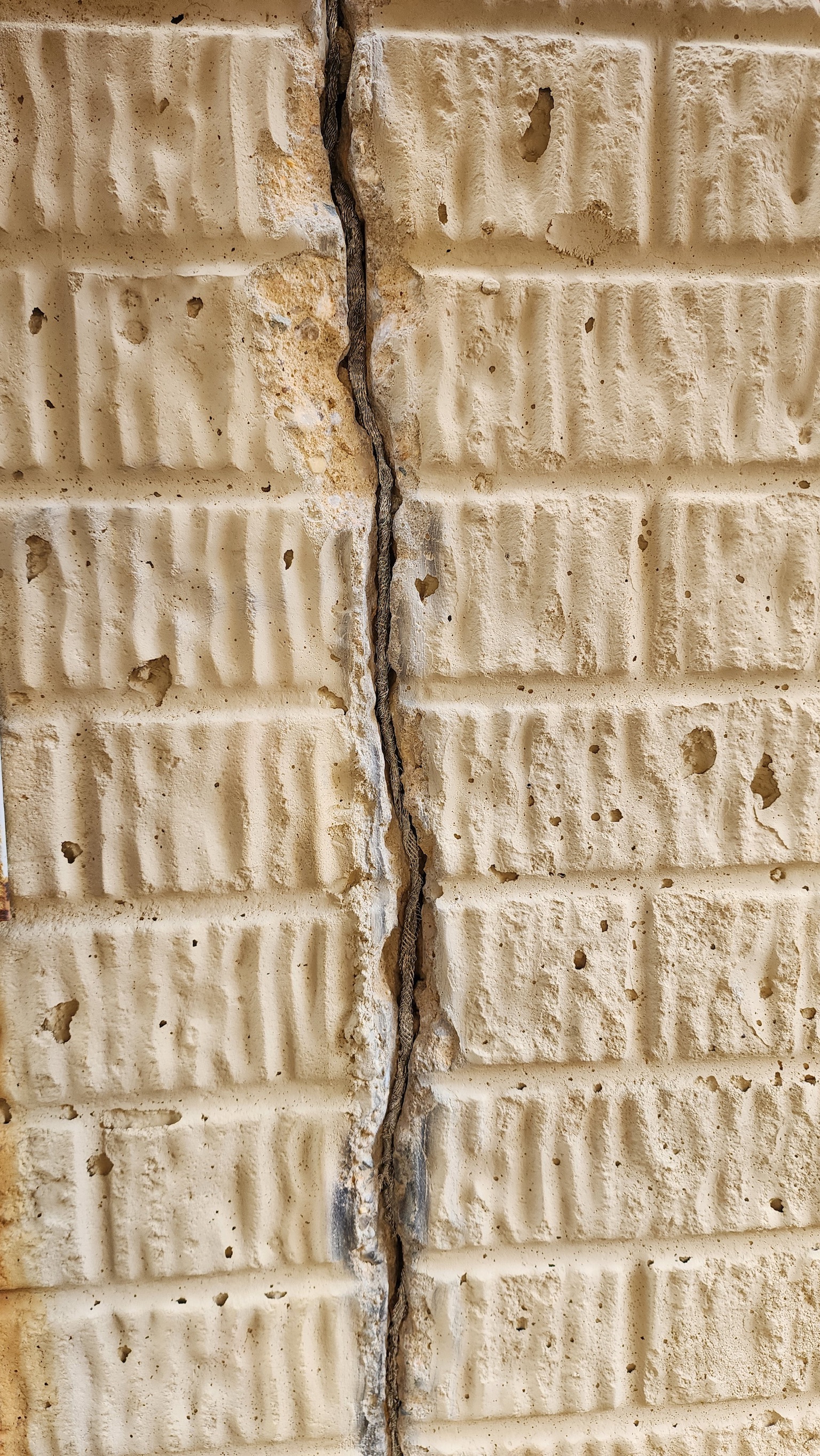
Maryland Clay Compresses. Drains Wash It Away. The Foundation Follows.
Foundation Settlement in Maryland:
What Causes It and What to Do
Maryland's Piedmont clay is the dominant soil type in the Baltimore area, Harford County, and much of the state's central region. Clay has a large volumetric change characteristic — it swells when saturated and shrinks when it dries. After decades of seasonal wet-dry cycling, the soil beneath a foundation may have compacted and consolidated to a lower density than when the house was built. The result is foundation settlement.
Differential settlement — where one part of the foundation settles more than another — is the most damaging form. Maryland homes often settle at corners or at spans where drainage concentrates water near the footing (eroding the bearing soil there faster than elsewhere), near large trees (whose roots extract moisture and cause the soil to shrink preferentially at that point), or in areas built on fill material that was never as dense as native clay.
The most important step before any pier installation is diagnosing what caused the settlement. Piers installed without understanding the cause may be placed in the wrong locations, or may be solving the visible problem while an unresolved drainage failure continues to undermine adjacent sections of footing. OBW's inspection maps the settlement pattern, identifies the cause, and specifies piers where they are actually needed.
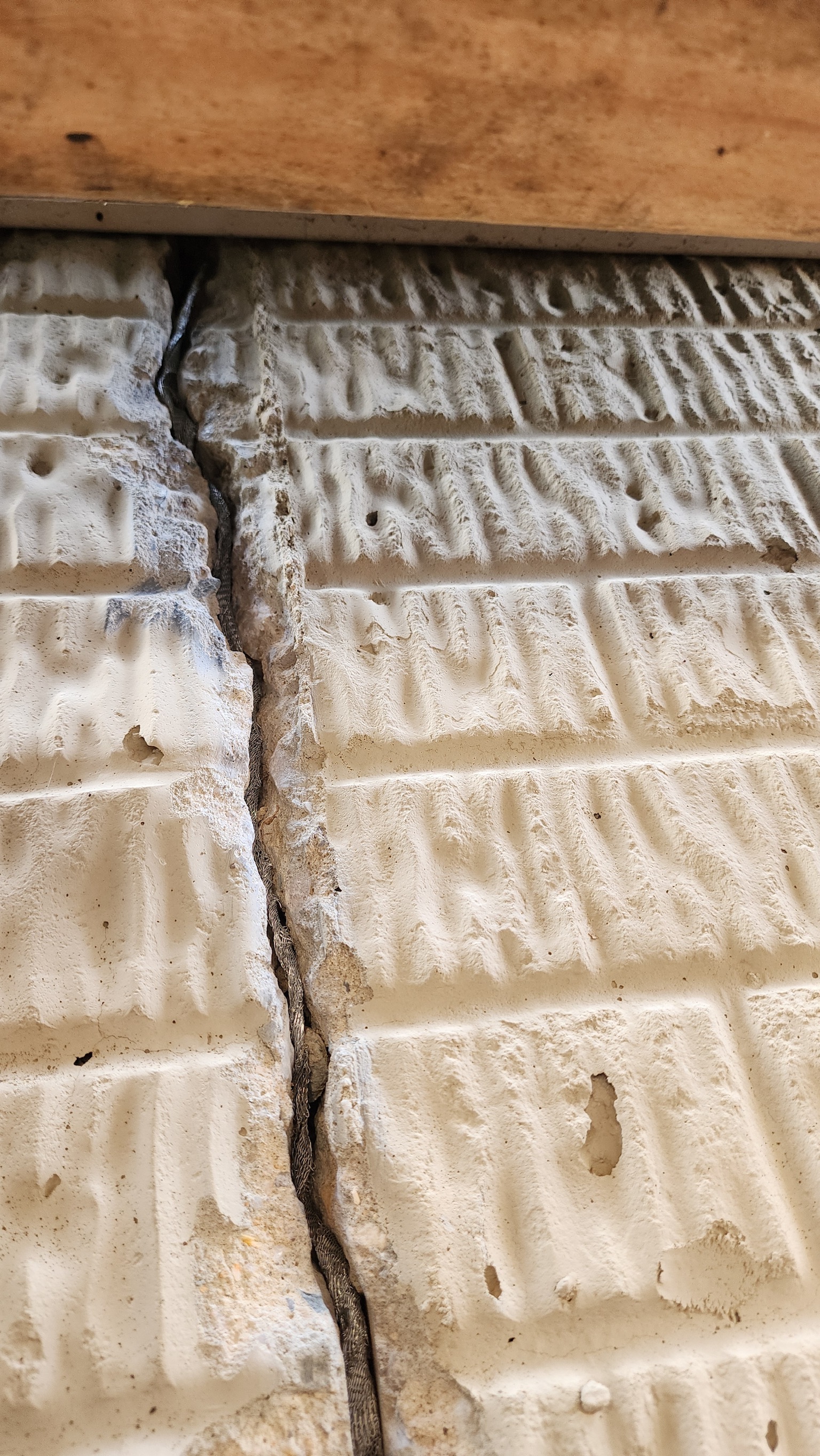
Diagonal crack at window corner — classic differential settlement sign in Maryland clay soil conditions
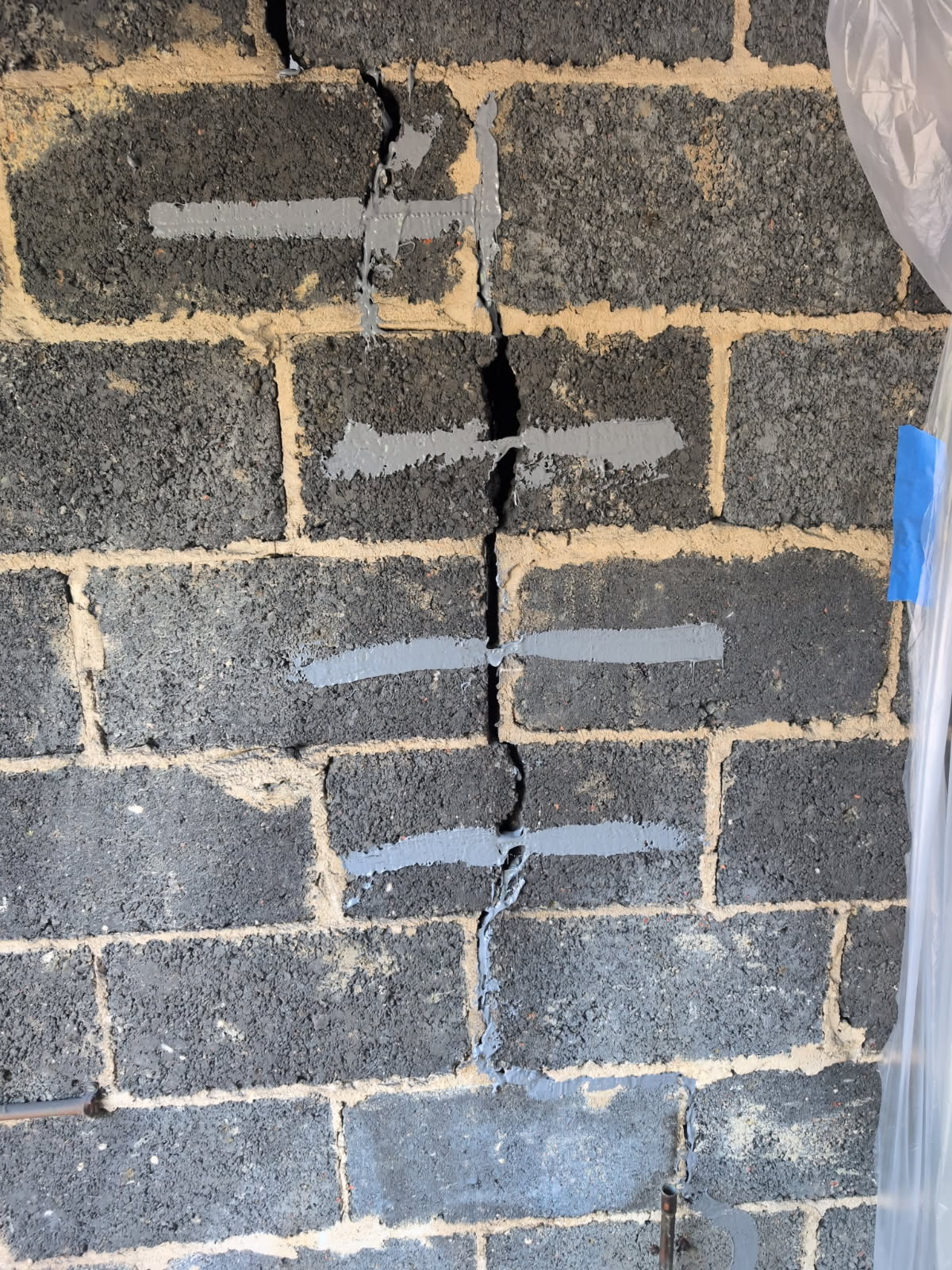
Settlement Shows in the House First
Warning Signs of Foundation
Settlement in Maryland Homes
Settlement shows up in the living space before most homeowners look at the foundation. These are the early warning signs — before the foundation itself becomes visible.
- Diagonal cracks at 45 degrees from the corners of windows or door frames
- Floors that slope toward an exterior wall — a marble rolls toward one side of the room
- Doors and windows that stick, drag, or no longer close — the frame has racked
- Visible gaps at the wall-ceiling or wall-floor junction — the structure has separated
- Stair-step cracking in exterior brick or block — foundation has settled below a section
What the Work Includes
OBW's Foundation Settlement Services
Settlement repair starts with understanding the cause. Everything that follows is designed to address that specific cause — not a generic pier installation on a foundation we don't fully understand.
Settlement Pattern Documentation
Floor slopes, crack locations, crack width measurements, and differential settlement calculations. Documented with photographs before any repair begins.
Cause Identification
Drainage failure, clay soil behavior, tree root extraction, fill material consolidation — OBW identifies the cause before recommending a pier solution.
Push Pier Installation
Hydraulically driven to competent bearing strata. Load transferred from unstable clay to stable deep soil via bracket at the footing.
Helical Pier Installation
Screwed to depth for lighter structures or limited-access applications. Available in configurations suitable for most residential settlement patterns.
Hydraulic Lift (Where Indicated)
After pier installation and load transfer, hydraulic pressure raises settled sections where structurally appropriate. Documented before and after.
Drainage Correction
Settlement caused by drainage failure requires drainage correction alongside pier work — otherwise the remaining soil bearing the footing faces the same erosive forces.
The Process
How OBW Diagnoses and Repairs
Foundation Settlement
Cause first. Plan second. Piers third. Verification last. No shortcuts on any step.
Settlement Assessment & Cause Diagnosis
Floor slopes measured, crack patterns mapped, exterior drainage assessed. We determine whether settlement is active or historical, and what caused it.
Pier Plan & Written Quote
Pier type, count, and spacing specified based on load and depth requirements. Written, itemized quote provided before any work begins.
Footing Exposure & Pier Installation
Small excavations at each pier location expose the footing. Piers are driven or screwed to bearing depth and bracket-connected to the footing.
Lift, Verify & Backfill
Settlement measurements re-taken after lift. Results documented. Excavations backfilled, site restored. Lifetime Transferable Guarantee issued.
Recent Projects
Foundation Settlement Repairs
in Maryland
Each project below required identifying the cause of settlement before the pier plan could be specified correctly.
Baltimore County Corner settlement from downspout discharge — drainage corrected, four push piers, floor slope reduced from 1.2" to near-level.
Harford County Tree root soil shrinkage — large oak removed, three helical piers stabilized settled corner. Settlement stopped.
Carroll County Fill soil consolidation — 1960s home on filled ravine. Six push piers, no lift attempted. Stable for three years post-repair.
Anne Arundel County Active differential settlement — drainage failure at rear of house. Eight piers, interior drain tile, complete floor slope correction.
Settlement Questions Answered Honestly
Foundation Settlement Questions
from Maryland Homeowners
Call (443) 855-5600 with questions about specific cracks or symptoms. Our inspectors will tell you on the phone whether what you're describing warrants an inspection now or can wait.
What is the difference between uniform settlement and differential settlement?
Uniform settlement occurs when all points of a foundation descend at roughly the same rate. A house that has uniformly settled an inch since it was built has effectively just moved down as a unit — the structure above it adjusted in a coordinated way, and while the foundation is now at a lower elevation than designed, the relative distress is limited. Doors and windows may work fine, floors remain level relative to each other, and there are no diagonal crack patterns.
Differential settlement is more serious: different points of the foundation settle at different rates or by different amounts. One corner drops 2 inches while the opposite corner drops half an inch. The structure above — designed to sit on a level plane — is now on a raked surface. The result is diagonal cracking from the corners of windows and doors, sloping floors, frames that rack and no longer close squarely, and sometimes visible gaps at wall-floor or wall-ceiling joints.
Most structural concern from foundation settlement is driven by differential settlement. OBW's inspection identifies not just that settlement has occurred, but the pattern of it — which corners or spans have settled more than others — because that pattern determines the scope and urgency of the repair.
Does foundation settlement always get worse over time?
Not always. Many foundations settle during the first few years after construction as the soil consolidates under the new load, then stabilize. Some of the settlement cracks that homeowners discover were actually created 20 or 30 years ago and have not changed since. A crack that has been the same width and length for a decade is much less concerning than a crack that has grown noticeably in the past year.
OBW's inspection marks crack ends during the initial visit. A follow-up inspection — particularly at the end of a wet season versus a dry season — can confirm whether a crack is active or static. Static, stable settlement is still documented and repaired for water and structural integrity, but the urgency and recommended repair scope is different from a foundation that is actively moving.
The situations where settlement reliably worsens: foundations on fill material (never fully consolidated), foundations with unresolved drainage failures concentrating water near the footing, foundations near large trees that are extracting moisture and causing ongoing soil shrinkage, and foundations where the original construction had undersized footings for the soil conditions. OBW looks for all of these during the inspection.
How does OBW diagnose the cause of foundation settlement?
The inspection combines crack pattern analysis, floor slope measurement, exterior drainage assessment, and soil conditions visible from accessible points. Crack patterns tell a story: diagonal cracks running at 45 degrees from window corners indicate differential settlement. Stair-step cracks following mortar joints in block walls indicate settlement at that section of the wall. Cracks that narrow toward the bottom and widen at the top indicate rotation of the foundation segment — the footing is being undermined at that point.
We look at exterior conditions as well: how close are large trees, where do downspouts discharge, what is the grading situation at the foundation? Downspouts that discharge within six feet of the foundation can erode and loosen the soil under the footing over years. Trees within 15 feet can extract enough moisture from the soil to cause differential settlement in Maryland's clay.
In some cases — where the settlement pattern is complex, accelerating, or involves a large section of the foundation — we recommend a licensed structural engineer assessment before specifying a repair. OBW does not attempt to diagnose problems beyond our expertise, and we will tell you when another professional is the right next step.
What are the pier repair options for settled foundations?
Push piers and helical piers are the primary methods. Push piers are hydraulically driven using the weight of the structure as resistance, advancing through unstable soil layers until they reach competent bearing strata. A bracket connects the pier to the footing and transfers the foundation load from the soft soil to the pier column. Once all piers are installed, hydraulic pressure can raise the settled section toward its original position.
Helical piers are screwed into the ground using a hydraulic torque motor. They don't require the weight of the structure to drive them, making them appropriate for lighter structures, limited-access areas, or sites where the push pier method isn't optimal. Both types are available in multiple sizes for different load capacities.
The number of piers, their type, and their spacing is determined by the load being supported, the depth to competent bearing strata, and the length of the settled section. OBW's inspection measures settlement differential at multiple points to determine which sections of the foundation need pier support.
What does foundation settlement repair cost in Maryland, and how long does it take?
Foundation settlement repair cost is driven primarily by pier count and depth. Individual piers run $800–$2,000+ each depending on type (push vs. helical) and depth required. A settled corner requiring four piers might run $4,000–$8,000. A longer settled span with eight to twelve piers could range from $10,000–$24,000 or more. Drainage correction, if needed alongside the pier work, is an additional line item.
The inspection is free. We provide a written, itemized quote that specifies pier type, count, locations, and expected outcome — including an honest assessment of how much lift is achievable and what risks exist in attempting full restoration of long-settled foundations.
Most residential settlement repair jobs take one to three days on site depending on pier count, site access, and whether any excavation around the footing is required. Business can continue as normal during most exterior pier installations — interior access is generally not required for the installation phase.
Why Oriole
Why Maryland Homeowners Trust
OBW for Settlement Diagnosis & Repair
Settlement diagnosis requires recognizing Maryland soil behavior — not just running a generic pier installation. 70 years of local experience informs every OBW assessment.
Cause First, Piers Second
Piers installed without addressing the drainage or soil cause that drove settlement may face the same forces on the untreated sections of footing. OBW diagnoses cause first.
Maryland Clay Experience
70 years of watching Piedmont clay compact, expand, and shrink under Maryland foundations. OBW's settlement diagnoses are informed by that experience.
Honest About Lift Potential
Not every settled foundation can or should be fully lifted. We tell you what is achievable for your specific settlement pattern and structure before you commit.
Lifetime Transferable Guarantee
Pier installation work carries OBW's Lifetime Transferable Guarantee. The next homeowner gets the same protection when you sell.
Stop the Settlement Before It Gets Structural.
Getting Started with
Foundation Settlement Repair
Settlement that goes unaddressed usually worsens. Active settlement that looked manageable two years ago can reach pier-required threshold before next spring.
Free Settlement Inspection
OBW maps the settlement pattern, measures floor slopes, identifies the cause, and determines whether the settlement is active or historical. Free, no obligation.
Written Pier Plan & Quote
You receive a written quote specifying pier type, count, locations, drainage correction (if needed), and expected outcome — including honest guidance on lift potential.
Pier Installation & Verification
OBW's crew installs piers, performs the lift where appropriate, and re-measures to document results. Lifetime Transferable Guarantee issued upon completion.
Diagonal Cracks Don't Fix Themselves.
Free settlement inspection. Cause diagnosis before piers. Lifetime guarantee.
Family-owned since 1953 · MHIC #4247 · Lifetime Transferable Guarantee