
Crawl Space Encapsulation · Dehumidifier
Crawl Space
Dehumidifier
Installation in Maryland
A vapor barrier alone isn't enough for Maryland's 70%+ summer humidity — active dehumidification completes the system
Contractor-grade units sized for Maryland conditions, with integrated condensate pumps that drain automatically to the sump. No manual bucket emptying. No box-store equipment that fails under real crawl space conditions.
Why Maryland Crawl Spaces Need Active Dehumidification
What a Crawl Space Dehumidifier
Actually Does
Maryland sits in one of the most humidity-challenged regions on the East Coast. Baltimore averages relative humidity above 70% from May through September. A sealed crawl space with only a vapor barrier manages soil evaporation — the largest moisture source — but still allows some ambient moisture infiltration through rim joists, penetrations, and normal air exchange at the access hatch.
A contractor-grade dehumidifier maintains the crawl space at a fixed relative humidity setpoint — typically 55% — regardless of outdoor conditions. At 55% RH, mold cannot establish in wood framing. Below 60% RH, wood moisture content stays within the range that prevents structural decay. The dehumidifier is the difference between a sealed crawl space that holds humidity in the safe range and one that drifts toward mold conditions every July.
The other function dehumidification serves: it keeps crawl space air quality from degrading the living space above. Roughly 40–60% of first-floor air in a typical home has passed through the crawl space. A damp, musty crawl space communicates that quality directly into your home's air supply. Maintained dehumidification breaks that cycle permanently.
Contractor-grade unit with condensate drain — operates unattended year-round
Signs Your Crawl Space Needs a Dehumidifier
Warning Signs That Humidity
Is Damaging Your Crawl Space
High crawl space humidity causes damage slowly and quietly. Most homeowners don't discover it until a home inspection or a mold assessment surfaces the problem.
- Musty odor that intensifies during Maryland's summer months
- Whole-house humidity your HVAC cannot control despite normal operation
- Visible condensation on pipes or HVAC ducts in the crawl space
- Batt insulation between floor joists that is sagging, damp, or falling
- Wood floors above the crawl space that cup, squeak, or feel soft in spots
What You Get
What OBW's Dehumidifier
Installation Includes
Every component specified for continuous, unattended operation in Maryland's crawl space conditions — not equipment designed for occasional household use.
Contractor-Grade Dehumidifier Unit
Sized for your crawl space square footage and air volume under real Maryland operating conditions — not box-store units rated for living spaces at ideal lab conditions.
Integrated Condensate Pump
Automatically routes collected water to the sump basin or to daylight. No manual bucket emptying — the system operates unattended year-round.
Condensate Drain Line Installation
Hard-piped drain line from the dehumidifier to the sump pump or exterior discharge point. Included in the installation — not an add-on you figure out later.
55% RH Setpoint Configuration
The unit is configured at 55% relative humidity — below the threshold where mold can establish in wood framing. Set correctly from day one.
Airflow Assessment
We evaluate crawl space layout and airflow patterns before placing the unit. In compartmentalized or long crawl spaces, placement matters as much as capacity.
Written Estimate Before Any Work
Honest, consultative guidance. Your quote specifies the unit model, capacity, and installation scope. A firm price before we schedule the job.
Assessed. Sized. Installed. Done.
How OBW Installs a Crawl Space
Dehumidifier
We don't drop a unit in and leave. Correct placement, condensate routing, and setpoint configuration are part of every installation.
Moisture Assessment
OBW inspects the crawl space, takes a current humidity reading, and evaluates moisture entry points. If groundwater or vapor barrier deficiencies are present, those are addressed before the dehumidifier is installed — putting a dehumidifier in a wet crawl space without fixing the source is a losing proposition.
Unit Sizing and Placement
The dehumidifier model is selected based on your crawl space square footage, ceiling height, and moisture severity. Placement is chosen to maximize air circulation across the full space — not just the area nearest the hatch.
Installation and Drain Routing
The unit is mounted, leveled, and connected to a condensate drain line routed to the sump basin or exterior. Electrical connection is made to a dedicated circuit. The condensate pump is tested before we leave.
Setpoint Configuration and Walkthrough
The unit is configured at 55% RH setpoint and tested through a full cycle. We walk you through the display readings, the maintenance schedule, and what to look for if performance drops.
Real Maryland Crawl Spaces
Recent Dehumidifier Installations
Across Maryland
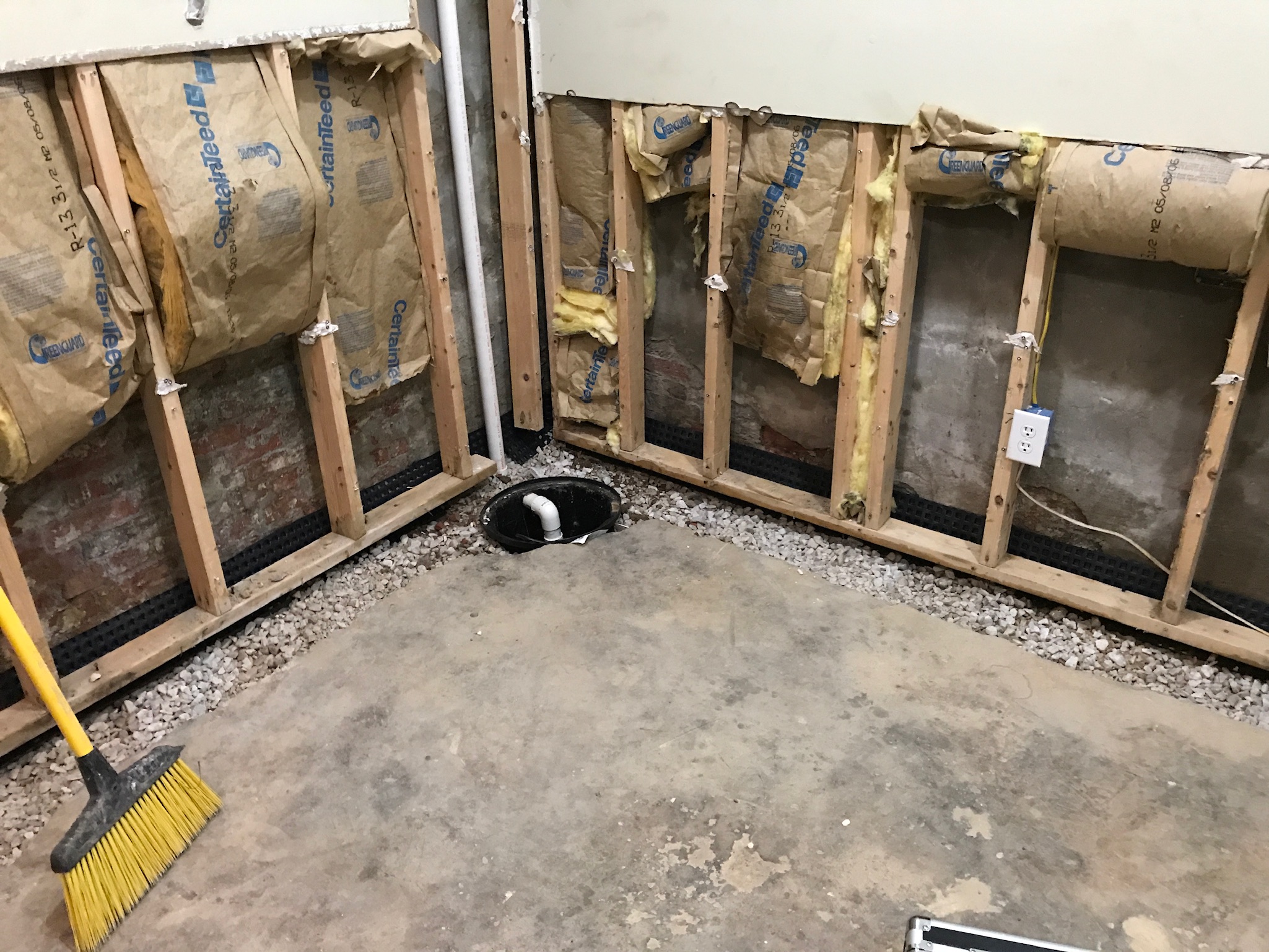
OBW documents every crawl space installation. Our crew photographs the space before and after — you see exactly what was done.
Contractor-grade unit installed with condensate drain to sump — runs unattended year-round.
Dehumidifier paired with full encapsulation liner — complete moisture control system.
Unit positioned for full-space airflow coverage in long, narrow crawl space.
Condensate routed to sump basin — no manual emptying ever required.
Honest Answers. No Sales Pitch.
Common Questions About Crawl
Space Dehumidifiers
If your question isn't here, call (443) 855-5600. Our inspectors answer questions and give honest, consultative guidance.
Do I need a dehumidifier if I already have a vapor barrier installed?
In most Maryland crawl spaces, yes. A vapor barrier eliminates the largest moisture source — evaporation from bare soil and through foundation walls — but it doesn't seal the space completely against all moisture entry. Rim joist areas where the floor framing meets the foundation wall are a consistent infiltration point. HVAC equipment located in the crawl space can contribute latent moisture. And in a truly sealed crawl space, there's no air exchange to carry accumulated moisture out.
Maryland outdoor relative humidity runs 70–80% on average through summer. Even in a well-sealed crawl space with no direct water entry, some air exchange still occurs — through penetrations, rim joists, and the access hatch. Without active dehumidification, that air exchange gradually elevates crawl space humidity toward outdoor conditions. Wood framing shows mold growth at sustained relative humidity above 70%. A crawl space that reads 68–72% RH on a July afternoon is at the threshold.
The practical recommendation is liner and dehumidifier together. Either one alone is incomplete. The liner stops soil evaporation — the primary source. The dehumidifier handles residual infiltration and maintains the crawl space below 55% RH year-round, which is the level at which mold cannot establish.
What's the difference between a crawl space dehumidifier and a hardware-store unit?
Contractor-grade crawl space dehumidifiers are built for continuous, unattended operation in a harsh environment. Consumer units from home improvement stores are designed for occasional use in living spaces — they're not rated for the temperature extremes, dust, and humidity levels of a crawl space, and most lack a condensate pump to drain automatically. A consumer unit in a crawl space will require manual emptying of the collection bucket, which means it stops working the moment the bucket fills. In a Maryland summer, that can be within 12–24 hours.
Capacity is the second difference. Consumer dehumidifiers are rated in pints per day under ideal lab conditions. Actual crawl space performance is significantly lower. Contractor-grade units are sized by square footage under real operating conditions and include an integrated condensate pump that routes collected water to the sump pump or to daylight — no manual emptying, no overflow.
Energy efficiency is the third factor. Contractor units are rated Energy Star at their actual operating point, not just at lab conditions. A well-sized commercial unit running continuously at 55% RH setpoint uses less total energy than a consumer unit cycling on and off and struggling to keep up. The energy cost difference matters because this equipment runs year-round.
How is a crawl space dehumidifier sized?
Sizing is based on crawl space square footage, ceiling height (which determines air volume), and the severity of moisture infiltration. As a general rule, manufacturer sizing tables for contractor units start around 1,500 square feet per unit for a standard sealed crawl space in Maryland's climate zone. Larger or wetter crawl spaces may require a higher-capacity unit or dual units.
The more important sizing consideration is not raw capacity but setpoint maintenance. A dehumidifier that is too small for the space will run continuously and still fail to hold 55% RH during Maryland's peak summer humidity. OBW inspectors take a moisture reading during the inspection and cross-reference it against the manufacturer's psychrometric charts for your specific crawl space volume before specifying equipment.
One installation detail that affects apparent sizing: the dehumidifier must be positioned so it can circulate air through the entire crawl space. In long, narrow, or compartmentalized crawl spaces, a single unit positioned near the access hatch will dehumidify only the near half of the space. OBW evaluates airflow patterns and may specify a unit with duct attachments or recommend a second unit for crawl spaces with obstructed airflow.
Where does the collected water go?
Contractor-grade crawl space dehumidifiers include an integrated condensate pump that automatically routes collected water to one of two destinations: directly to the sump pump basin (most common, and the cleanest installation), or to a drain line that exits the crawl space to daylight if the grade permits. Either way, the system operates without any manual intervention.
This is a critical difference from consumer units, which rely on a collection bucket that must be emptied. A forgotten or overflowing bucket defeats the purpose of the dehumidifier entirely. OBW specifies units with reliable condensate pumps and installs the drain line as part of the dehumidifier installation — not as an afterthought.
How do I know if my crawl space dehumidifier is working?
The simplest indicator is a hygrometer — a humidity sensor — placed in the crawl space. Most contractor-grade dehumidifiers have a built-in digital readout of current relative humidity and the setpoint. The unit should be cycling on and off rather than running continuously. Continuous operation in mild weather indicates the unit is undersized or there's an unresolved moisture entry point. Never cycling (when you'd expect it to) indicates the sensor may have failed.
A secondary indicator is the condensate pump output. If the unit is pulling moisture, you should see periodic water discharge through the drain line. No discharge during Maryland's humid months usually means the unit isn't operating correctly.
OBW recommends checking the crawl space hygrometer reading and the dehumidifier's digital display once per season. If the reading is consistently above 60% RH when the unit is running, call for a service check. Catching a failing unit in spring prevents a summer of elevated moisture accumulation in the framing above the crawl space.
70 Years of Maryland Crawl Spaces
Why Maryland Homeowners Choose
Oriole Over National Brands
Three generations of the Pirog family have been solving Maryland crawl space problems since Frank Pirog Sr. founded Oriole in 1953.
Honest, Consultative Guidance
Our inspectors diagnose the actual moisture problem first. If a dehumidifier alone isn't the right answer, we'll tell you before you commit to anything.
Lifetime Transferable Guarantee
OBW's encapsulation guarantee transfers to the next homeowner automatically. That's a documented selling point at closing — national franchises don't offer it.
Sized for Maryland's Climate
Maryland summer humidity runs 70–80% outdoors. We size equipment for those conditions — not for the drier climates most manufacturer charts assume.
Family-Owned Since 1953
Founded by Frank Pirog Sr., now led by CEO Amber Pirog. Over 70 years solving Maryland crawl space problems — we know what equipment holds up and what doesn't.
Ready When You Are. No Pressure.
Three Steps to a Dry,
Controlled Crawl Space
From first call to completed installation, most OBW dehumidifier installations are scheduled and complete within one to two weeks.
Schedule a Free Inspection
An OBW inspector visits your crawl space, takes a current humidity reading, evaluates moisture entry points, and assesses whether the liner system (if present) is intact. No charge, no obligation.
Get Your Written Estimate
You receive a written quote specifying the dehumidifier model, capacity, condensate routing plan, and full installation scope. A firm price before anything is scheduled.
We Handle the Installation
Our crew installs and commissions the unit, routes the condensate drain, sets the 55% RH setpoint, and walks you through the system before leaving. Warranty documentation provided on-site.
Ready to Control Your Crawl Space Humidity?
Free inspection. Written estimate same day. No pressure — honest, consultative guidance.
Family-owned since 1953 · MHIC #4247 · Lifetime Transferable Guarantee